Showing posts with label Rafael Nadal. Show all posts
Tuesday, 7 February 2012
Australian Open 2012: Reactions
I think it's fitting that my response to one of the most exhilarating Grand Slams in the recent history of tennis has taken a while to be mulled over and committed in writing. For how do you do justice to a 6 hour long Grand Slam final (the longest Grand Slam final in history) in which two men combined to produce possibly the most titanic physical and mental battle the sport has ever seen? My impression after the match was of incomprehensibility; an inability to put into words what had just been witnessed. It was an epic of such mountainous proportions that victory and defeat became but circumstantial in the grand scheme of what was surely one of the great finals from any sport in the world. It transcended the boundaries of tennis as a niche sport, grabbed the attention of sports fans around the world, and did wonders for a sport that some have foolishly accused of not being capable of brutality. It has become tiring in the past 6 months to say it, but both men have contributed to raising the bar once again, accomplishing history and producing another dimension to the golden era. It has set the tone (and the bar) for the rest of the year, as well as setting off feverish speculation over what could happen this season, which just so happens to be an Olympic one. Here are my thoughts, predictions, and pontifications from the Australian Open.
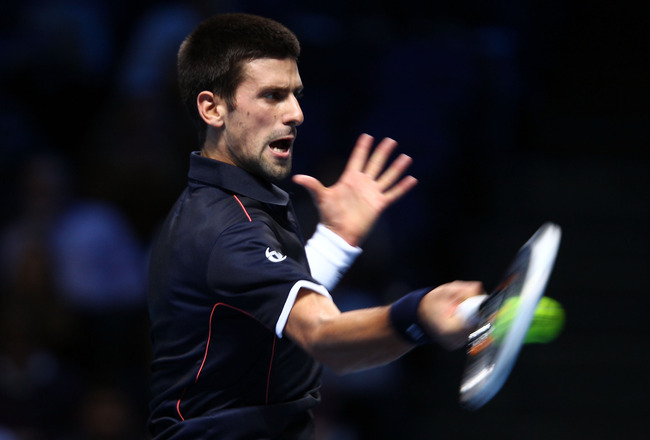
What more to say about Novak Djokovic? He survived the longest Grand Slam in history, facing no less than one of the greatest warriors to ever play the game, and he did it 48 hours after another 5 set epic with Andy Murray, in which he was similarly faced with defeat in the final set. He looked a beaten man at times in both matches, but Djokovic has a well of unshakeable determination these days that he can reach into when he needs it the most. The man has become almost nerveless under pressure, and unflinchingly brave at crunch time in matches. The reaction after the final was not just of awe at the historic event, but partly the astonishment that Djokovic had managed to turn the match around against a man known for being a mental giant, and following what was a seismic shift in momentum at the time. Momentum is an almost impossible thing to stop, but Djokovic has shown time and time again that he can stand in front of the freight train, take its impact and power his way back into the match when all the odds are against him. It takes a phenomenal exertion of willpower to do that, and Djokovic did it twice in a row when it mattered the most. Mentally he is the man of steel right now, and it will take a mighty loss to dent his confidence, which is sky high and beyond right now. As for his tennis, his return game was more lethal than ever, reducing Rafael Nadal to admiration of what he can do with that shot, and offering praise for a weapon which was without doubt the reason he managed to fight his way back into the match. He may well be the best returner in history, better than Connors, better than Agassi. His groundstrokes were heavy, impeccably measured and devastating for Rafael Nadal, who was only intermittently able to control the pace of the bombardment. His forehand was firing, and his backhand was unbreakable as ever. Of the top 4, he has the fewest weaknesses, and they are only relative ones at that. His forehand is however still the best target to attack, and Nadal went to that spot with varying success; and a potential element lacking in his game is his unwillingness to attack the net when the opportunity arises. But the bottom line is that it will take a stupendous performance, such as that produced by Nadal or Murray to even get close to defeating him. While Djokovic has emerged the victor, there is hope at least that Djokovic's hunters will eventually get to overturn him at a Grand Slam.
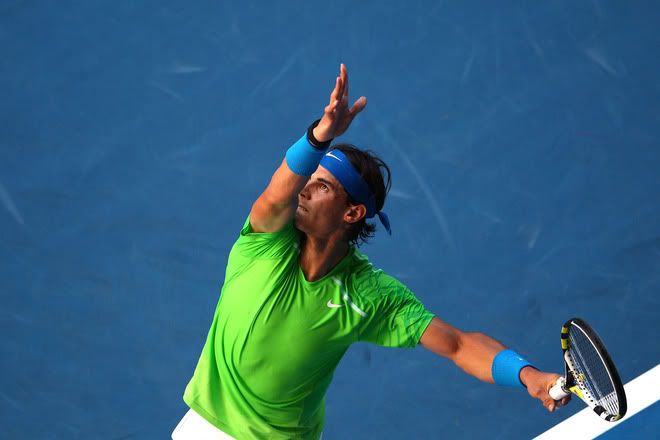
For Rafael Nadal, it was a hugely positive progression. After being virtually smoked in every match he played with Djokovic since Miami, he pushed Djokovic to the limit and then some. He forced him to struggle for his 5th Grand Slam and into a deciding set, which he very nearly clinched, and probably should have done after leading 4-2 with the wind of momentum firmly behind him. He was playing aggressively, serving effectively and looked re-energised after eking out the 4th set so emphatically, before he made the possibly fatal error of missing a simple backhand putaway serving at 30-15. At the time it was a hugely significant miss and gave Djokvic the impetus he needed to turn the match around, but Nadal was quick in his post-mortem conference to dismiss the impression of the shot as the reason he was broken, and eventually lost the match. He instead pointed lucidly and not lamentedly to the brilliance of Djokovic's return game - and it was an incredible return that forced Nadal to spill a forehand on break point that enabled him to get back into the match. It is not only admirable for Nadal to recognise that the Serb may well be the greatest returner in the history of the game, but healthy for him to acknowledge that it was not just an error on his part that lost the match, but also the shot which (not coincidentally) bailed him out of the US Open semi-final when he was match point down. Despite suffering arguably the most crushing loss of his career, he left with a remarkable sense of direction, and the knowledge that he has the ability to put himself in positions to win against his nemesis again. And should they meet once more at the French Open, I cannot imagine that he will lose to Djokovic on his home turf. As far as paradoxes go, it was an encouraging loss. There were however still elements where Djokovic's superiority was apparent, and which Nadal must improve quickly. He avowed to play inside the court and be more aggressive against Djokovic, but for the majority of the match he reverted to his defensive mode and stayed well behind the baseline in rallies and when receiving serve. Too often he fell into his own trap of going crosscourt into Djokovic's backhand with the same ineffective result, and was too predictable with his tactics. On the other hand, he served better than in the US Open final, producing 10 aces, and during the tournament seemed to have improved his sliding left hander serve, which worked particularly effectively against Berdych and Federer. However it still baffles commentators where his huge 130 mph+ serve which he unveiled at the 2010 US Open has gone to. He needs it more than ever, and it would be a big weapon to mobilise against the return game of Djokovic.
It was Djokovic's third Australian Open, his fifth Grand Slam, and his third major in a row starting with Wimbledon last year. He has his sights set on the French Open and the accomplishment of the 'Djoker slam', and should he manage that, well, the effect on the tennis world would be earth shattering. He would be the only man other than Rod Laver to achieve four slams in a row, and furthermore in the presence of two of the greatest players to play the game, Roger Federer and Rafael Nadal. After winning the Laureus Award for Sportsman of the Year, he was quoted as saying he believes anything as possible, including winning Roland Garros, Wimbledon and the Olympics. One thing is for certain: Nadal, Federer and Murray will all be out to make sure that feat is a bridge too far.
Monday, 16 January 2012
Australian Open Preview
What a difference a year makes. Flash back a year to last year's Australian Open when all eyes were on Rafael Nadal winnning his fourth grand slam in a row to accomplish a calendar slam - or what was being affectionately called the 'Rafa slam'. Djokovic at this time was still, relatively speaking, a footnote to the Nadal-Federer duopoly, who had won the last four majors between them, but with his Davis Cup triumph he was starting to gain ground, and the footnote was to be replaced with an exclamation mark at the end of his name.
This year the narratives are richer and more compelling than ever. Many commentators have remarked that the men's draw is more open than it has ever been, and that this may be one of the rare occasions when the top 4 players are all at their strongest at the same time. Novak Djokovic is attempting to keep his Grand Slam narrative going by claiming his third in a row, and even though he hasn't played a tournament yet this year, he looked imperious at the Abu Dhabi exhibition, dismantling both Federer and Ferrer at the loss of less than 10 games. Nadal, who has been afflicted by a shoulder injury for the past two months has assured that it is in perfect condition, and in his presser declared that he feels reinvigorated to get back to his best form, armed with a slightly heavier racket which he hopes will produce more power. Federer finished the year strongly by winning the World Tour Finals, and with the Olympics his main priority, there will be extra motivation for him this year to get back to the top. An injury scare with his back has apparently subsided, and Federer will feel confident that he can take anyone who stands in his way and fulfil what might be called his phoenix rising from the ashes narrative. Perhaps the most fascinating intrigue of the top 4 is Andy Murray and his new coach Ivan Lendl. As I commented in a previous post, I expect Lendl could do wonders for Murray's game and mentality, and if everything materialises correctly for him, it might well result in his first major. It is an enticing multiplicity of prospects for the top 4, and a fascinating start a year which is also an Olympic one.
Draw Analysis:
Novak Djokovic has by far the easiest draw, and is unlikely to be tested until the fourth round, where he may meet the rolling Canadian with a fearsome serve, Milos Raonic. And even then, his return game and superior ground strokes should be enough to see neutralise the rising star's heavy game. He may face David Ferrer in the quarter finals, but it is hard to see him staying with Djokovic despite a convincing win over him at the World Tour Finals two months ago. Federer has the next smoothest passage to the semi finals, with Mardy Fish as the highest seed in his quarter. He has a joker in the pack via a possible meeting with Ivo Karlovic in the third round, but realistically the giant Croat does not have a chance of breaking the Swiss' still running grand slam quarter final streak. The mercurial Dolgopolov Jr. is in his quarter, but it is hard to see him troubling the four time winner, as his game is simply too erratic to produce a consistent performance (he scraped through in 5 sets today). The one big name in there is the talented and powerful Juan Martin del Potro, who is still on the road back to the top and possesses the firepower to blast anyone, including Federer, off the court.
Nadal has a tricky route to the semi-finals with John Isner as a looming third round opponent. Isner gave Nadal a very real scare at the French Open in the first round last year, and on hard courts his huge serve will be even more potent for an upset. Other big servers include compatriot Feliciano Lopez and Kevin Anderson. Tomas Berdych is a potential quarter final opponent for Nadal, and has been playing some excellent tennis recently with his strong semi final finish at the World Tour Finals acting as a strong reminder of how good he can be when he catches fire. Berdych has given Nadal trouble in the past, and has the best chance of inflicting a shock defeat on the Spaniard.
At the other end of the spectrum, Murray has an extremely difficult draw. His first round opener against the plucky Ryan Harrison is the hardest among the top 4, and the young American won't go down without a fight. He may meet Gael Monfils in the fourth round, who is just coming off an excellent showing at Doha where he defeated Rafael Nadal, but even more alarmingly he has the dark horse for the title in his corner, Jo Wilfried Tsonga. The blockbusting Frenchman won Doha recently and was arguably the second best player in the world at the year end, and is looking poised to play the role of spoiler at the grand slams once again. Unfortunately for Murray, if the players meet their seedings in the draw, he will likely have to go through Tsonga, then Djokovic, and then either Federer or Nadal in the final, a monumental task - but a possible one under the new tutelage of Ivan Lendl.
Semi-final predictions:
Novak Djokovic vs Andy Murray
Roger Federer vs Rafael Nadal
Draw Analysis:
Novak Djokovic has by far the easiest draw, and is unlikely to be tested until the fourth round, where he may meet the rolling Canadian with a fearsome serve, Milos Raonic. And even then, his return game and superior ground strokes should be enough to see neutralise the rising star's heavy game. He may face David Ferrer in the quarter finals, but it is hard to see him staying with Djokovic despite a convincing win over him at the World Tour Finals two months ago. Federer has the next smoothest passage to the semi finals, with Mardy Fish as the highest seed in his quarter. He has a joker in the pack via a possible meeting with Ivo Karlovic in the third round, but realistically the giant Croat does not have a chance of breaking the Swiss' still running grand slam quarter final streak. The mercurial Dolgopolov Jr. is in his quarter, but it is hard to see him troubling the four time winner, as his game is simply too erratic to produce a consistent performance (he scraped through in 5 sets today). The one big name in there is the talented and powerful Juan Martin del Potro, who is still on the road back to the top and possesses the firepower to blast anyone, including Federer, off the court.
Nadal has a tricky route to the semi-finals with John Isner as a looming third round opponent. Isner gave Nadal a very real scare at the French Open in the first round last year, and on hard courts his huge serve will be even more potent for an upset. Other big servers include compatriot Feliciano Lopez and Kevin Anderson. Tomas Berdych is a potential quarter final opponent for Nadal, and has been playing some excellent tennis recently with his strong semi final finish at the World Tour Finals acting as a strong reminder of how good he can be when he catches fire. Berdych has given Nadal trouble in the past, and has the best chance of inflicting a shock defeat on the Spaniard.
At the other end of the spectrum, Murray has an extremely difficult draw. His first round opener against the plucky Ryan Harrison is the hardest among the top 4, and the young American won't go down without a fight. He may meet Gael Monfils in the fourth round, who is just coming off an excellent showing at Doha where he defeated Rafael Nadal, but even more alarmingly he has the dark horse for the title in his corner, Jo Wilfried Tsonga. The blockbusting Frenchman won Doha recently and was arguably the second best player in the world at the year end, and is looking poised to play the role of spoiler at the grand slams once again. Unfortunately for Murray, if the players meet their seedings in the draw, he will likely have to go through Tsonga, then Djokovic, and then either Federer or Nadal in the final, a monumental task - but a possible one under the new tutelage of Ivan Lendl.
Semi-final predictions:
Novak Djokovic vs Andy Murray
Roger Federer vs Rafael Nadal
Monday, 5 December 2011
2011 Davis Cup Final Reaction: Spain def. Argentina
So the Spanish Armada sails again, reclaiming the Davis Cup through a monumental struggle against a courageous Argentinian team. Rafael Nadal had the grand honour of clinching the title for his nation, and for the final match of the tennis year, it was a fitting, epic battle replete with marvellous and audacious shotmaking, incredible athleticism and a towering display of willpower from both the eventual victor, and his devastated opponent, Juan Martin del Potro. The atmosphere was more raucous than at any other tournament this year and the Argentinian contingent pound for pound matched the greater number of home supporters in the magnificent stadium in Seville. Each man energised his own support base and they in turn gave the spur to both players to keep fighting and find something extra, a dynamic which makes the Davis Cup so exciting to watch.
Del Potro gave the Argentinian supporters plenty to cheer for when he made a sprint start that knocked Nadal off his feet for the whole first set and at the start of the second. The Tower from Tandil, as he is endearingly called, opened the match with a barrage of cannon ball groundstrokes to hit a flurry of winners past a nervy looking Nadal, forcing the Spaniard far back behind the baseline. It was a firestorm of incredible hitting that carried on without hesitation into the second set where it looked like an unthinkable upset was now a distinct possibility. But Nadal crucially kicked his game up several levels after being broken straight away at the start of the second and managed to start hitting the ball bigger and deeper, dictating more rallies and mentally shaking himself out of the shellshock which had scuppered his game up to that point. Both men traded service holds until 5-4 when Del Potro faltered while serving to stay in it. It was a huge shot in the arm for Nadal and the first sign of nervousness from the Argentinian, who fell off the pace in the third set while the clay maestro dramatically increased his level, upping his aggression and winner count to shut his now flagging opponent out, 6-1. Now rolling along with wind in his sails the Spanish helmsman looked to do the same in the fourth set as he broke immediately. Del Potro looked shattered and overwhelmed by the task ahead of him, but incredibly despite all this he mounted a stubborn comeback, and managed to recoup the break to level at 2-2. However, the deficit was quickly resumed as Nadal broke to go 3-2 up, and by this point it seemed that the match was almost entirely over.
It was last stand territory for del Potro, and he responded magnificently, finding the magnitude of shot that earned him the first set. and smashed through Nadal's defences to break immediately back.. It is a truly terrifying sight to watch him rocket the ball so cleanly and powerfully, and he is perhaps the one player that everyone on tour fears to play more than any other when he is finding the lines. After blasting a forehand at Nadal to force an error on break point he launched himself into the air with renewed vigour, and with the Argentinian supporters making their voices heard as he broke to lead 5-3 he looked poised to force a decider. However the set's see-saw like logic would not permit the set to finish by virtue of a service break and Nadal clawed the break back with a brilliant forehand pass down the line. After holding to draw level at 5-5, he engineered what many would have assumed to be the definitive break of serve, but while del Potro looked like a man who had absolutely nothing left, he refused to yield and struggled his way to force an opportunity to take the set into a breaker, breaking to 30 with his battering ram forehand. But Rafa was not to be denied, and he subsequently ran away with the tiebreaker to secure another Davis Cup for Spain and put the spoils on Argentina's still un-satiated campaign for its first.
Spain is a Davis Cup powerhouse right now, and is arguably pound for pound the best team nation of the last decade. It has a depth of quality that few other nations come close to matching and has proved that even without Nadal it can prevail - as it did against Argentina in the 2009 final, which was also on hard court and not on home territory. But with Nadal as the spearhead it inspires confidence in Spain's ability to clinch future ties in pressure situations. It must have been a huge release of pressure for Nadal after enduring a year of heavy losses to Novak Djokovic, and to have the honour of clinching the Davis Cup over a brilliant effort from Juan Martin del Potro could well provide the impetus for him to overturn his difficulties this year and rekindle the passion he has admitted to be lacking of late. Praise however must also be justly lavished on David Ferrer, who vanquished del Potro two days before Nadal in an arduous five setter and shares the victory every bit as much as Nadal. If Tito Vasquez' strategy of winning the non-Nadal matches worked, starting with del Potro defeating Ferrer, the outcome may well have been reversed. But Ferrer proved like Nadal that he is a man for the big stage and weathered the onslaught to put Spain in a commanding position after the first day, and would have been fully capable of clinching the tie if it went to a fifth rubber. They have a daunting Davis Cup record between them with an untarnished singles resume on the clay, and are undoubtedly the strongest singles pairing in the world right now. For both men it is a humble victory for the nation and not for either of them individually, but simultaneously the victory will give them the confidence to start 2011 as strongly as they ended it. Although for Nadal this year was undoubtedly one of his worst, and he bowed out of the World Tour Finals looking lacklustre, he still won the French Open and the Davis Cup - two tournaments we can say he comfortably owns when he is on form. Ferrer on the other hand produced his finest season to date. He beat two different world no.1s (Nadal in Australia, Djokovic in London), made the World Tour Finals semi-final and helped Spain secure the Davis Cup, as well as performing almost all year round at his highest ability. They are both excellent ambassadors for the sport, and their dedication to find the energy to win the Davis Cup the week after the World Tour Finals was a phenomenal display of sheer mental determination.
To close, it would be an insult not to remark on the tremendous performance of Juan Martin del Potro throughout the Davis Cup and the bright future many have predicted for him. The pressure was all on his shoulders, and for someone we forget is still young, he committed himself admirably despite being on the losing side twice in a row. He pushed both Ferrer and Nadal as far as he could and fought relentlessly to prolong a tie which was skewed favourably towards the Spanish, summoning some his best tennis for the biggest occasion. There were not just flashes of his US Open victory in 2009, but extended examples of how good del Potro could be next year; in the first set against Nadal he played a flawless set of outstanding attacking tennis, and looked convincing enough at that point to have won the match. Against Ferrer he led by two sets to one and perhaps should have closed it out in the fourth set, but was eventually beaten by the Spaniard who has a signature habit of not staying dead. Del Potro was understandably hurting a lot after both losses (mentally and physically) but the signs are encouraging for an immensely talented player many still project to be a future world no.1. His rise this year into the top 20 from outside the top 200 has been nothing short of staggering, and we can read his last two performances of the year as a warning shot to the rest of the tour. Currently ranked 11, he inhabits the position of a danger man no one wants to face in the early stages of a Grand Slam, and he gave both of the two best players in the world a scare at the French Open and at Wimbledon, managing to take a set off Djokovic and Nadal and threatening to pull off a huge upset. He has the ability and the belief that he can return to the heights of winning his first major, and it will provide one of the most interesting narratives next year, one that may even impact on those of the current top 4.
Friday, 2 December 2011
2011 Davis Cup Final Preview: Spain vs Argentina
In a rematch of the 2008 final, Spain will face off against Argentina in front of a home crowd in Seville, Spain. The Spaniards are heavily favoured to raise the Davis Cup again, and for the Argentinians the odds would appear to be stacked monumentally against them. It is possibly the most daunting prospect of defeating a clay specialist nation on its own turf, against the greatest clay court player of all time and his formidable wingman, David Ferrer over 5 sets, and an excellent doubles team in Feliciano Lopez and Fernando Verdasco.
Argentina will be relying heavily on Juan Martin Del Potro to make an upset by defeating David Ferrer in the second singles rubber and attempt to put the Spanish doubles team under pressure going into the second day. The coach of Argentina, Tito Vasquez, has already made a bold gamble to front Juan Monaco for the opening rubber against Rafael Nadal instead of the superior Nalbandian, who is scheduled to play the doubles with Eduardo Schwank, and the logic would appear that he is hoping for Del Potro to win, and to take the doubles the following day. One can only conclude that the strategy with Monaco is to draw the match against Nadal out, because it is unforeseeable that he would be able to defeat the King of Clay, who has never lost on clay in the Davis Cup, and to win as many matches around those involving Nadal, as possible. Unfortunately, it is a strategy that doesn't make a lot of sense - the approach should be to win every match, not to build it around calculating the matches which can be won or lost. The efficacy of his strategy will be borne out after the two singles matches are played tomorrow.
Certainly, the talented, huge hitting Del Potro has an excellent chance against Ferrer, who has admitted to feeling tired, and being forced to extend his tennis season because of the Davis Cup final. The tall Argentinian is a very good clay courter and moves very well on the surface, and with his powerful groundstrokes combined with what has been reported to be a zippy surface, he may well be able to hit through Ferrer. But we should not expect less than everything from Ferrer, who is an excellent clay player and a defensive fortress -no matter how tired the Spaniard is, Del Potro will need to be striking a clean consistent ball against him to have a chance.
It is difficult to envision the Argentinians upending the Spaniards on home territory, but there is a glimmer of a chance, and will depend firstly on Del Potro getting a win over Ferrer - if Spain take the first two matches, the tie could well be over. But even then the pressure will still be on them to secure the doubles on saturday, which is another uphill task against two experienced players in Lopez and Verdasco. I can't see past a convincing win for Spain with the intimidating Rafael Nadal at the helm of one of the strongest Davis Cup teams in recent history.
Prediction: Spain: 4 Argentina: 1
Saturday, 19 November 2011
ATP World Tour Finals 2011 Preview
The clash between the top 8 players in the world commences this Sunday in what must be one of the most anticipated year end championships in a long while. What has been dubbed the 5th Grand Slam promises some scintillating clashes and the emerging consensus among tennis commentators is that although the big 4 are the obvious front runners, there is a good potential for some high profile upsets. Most prominently, Rafael Nadal and Roger Federer have been drawn in the same group and will be playing the most anticipated group match in the World Tour Finals this year, while world no.1 Novak Djokovic and Andy Murray will face off in the other group.
The front runner is surely Federer, on a hot streak with two straight titles in Basel and at the Paris Masters - one of the few Masters tournaments to evade the maestro - and playing commanding attacking tennis. It would be a huge shock to see Federer bow out before the semi finals, who seems to thrive during the indoor season, and there will be no obstacle of surface transition as there could be for Rafael Nadal. The 02 is a court that plays very similar to the Paris Masters (slow, low bounce) and that only helps Federer's cause for making an historic win of 6 year end championships, and putting the fear of his name back into the cohorts who have outdone him this year.
Nadal on the other hand is an unknown quantity; he lost early in Shanghai, skipped Paris and as traditionally regarded is thought to be on his weakest surface, and at his weakest time of the year. But Nadal is smart, and the decision to skip Paris was predicated on the upcoming Davis Cup final with Argentina not long after the World Tour Finals. One gets the sense that out of the World Tour Finals and the Davis Cup, Nadal would rather sacrifice a win at the 02 for Davis Cup glory, and that he will be trying to conserve himself for a potentially arduous battle against the Argentinians, who are no slouch when it comes to clay, and are packing the heat of Juan Martin Del Potro and David Nalbandian. If that is the case we might see a looser Nadal than usual who is willing to flatten his shots out and kill matches earlier, and he may be even more dangerous than he usually is in that sense. Lest we forget, he made it to the final last year and played Federer pretty close, and despite the objectors Rafa has shown he has the ability and sheer determination to fight on surfaces that are not quite so propitious to his topspin founded game.
Djokovic, similar to Nadal, is erring on the side of fragility at the moment, and the big question still hanging in the air is over the severity of his shoulder injury which has forced him to retire on several occasions in the past few months (including a premature withdrawal against Jo Wilfried Tsonga in Paris earlier this month). He has however said that the shoulder was at 100% during serve practice, so we'll have to take his word for it, whether he appears to be downplaying it or not.With Novak's year, we can never count him out.
Murray is on a hot streak despite losing to Berdych in Paris last week, and has only lost one matche since bowing out of the US Open to Rafael Nadal, whom he defeated to take the Tokyo title, including a 6-0 final set in which he played superb attacking tennis. Murray seems to thrive in the pressure of playing in front of his home crowd, and will be energised somewhat by his new no.3 ranking accrued during the Asian hardcourt swing. It could well be his his first WTF final, following which the British media will go into its usual hyperbolic frenzy.
Finally, the competition cannot be underestimated and should not be considered as 'the rest'. David Ferrer is a nightmare to play against on his best days and no one should be surprised if he takes some high ranking scalps. Jo Wilfried Tsonga and Tomas Berdych are dangerous, powerful hitters who are particularly proficient on indoor hard court, Tsonga having made the final of Paris last week, and Berdych being the winner recently of Beijing. Perhaps the weak link is Mardy Fish, but again, he has a game conducive to hard courts with his big serve and willingness to rush the net.
This is a highly open draw in terms of competitiveness, and don't be surprised if we see more than one surprise semi-finalist. Every man feels he has a chance against the next, and that should provide for some brilliant tennis.
Saturday, 22 October 2011
Winter Preview
With the Asian hard court swing completed there are only two major events to the year left: the Paris masters, and the World Tour Finals in London. In some ways, this part of the season hasn't been much different from last year's; the players are understandably tired - Djokovic is out recovering from a back injury and Federer skipped the Shanghai masters to rest -, Nadal has entered his late year doldrums with a surprising loss to Florian Mayer and an inexplicable final set rollover in the final of Tokyo against Murray; and like primed clockwork, Murray has torn up the Asian hard courts with titles in Bangkok, Tokyo and Shanghai, and only one loss in his last 26 matches. Murray will be the favourite at the Paris Masters after his recent rampage, and he has been playing exceptional, aggressive tennis in the past 3 weeks or so which will put him in good stead to capture Paris on its ultra fast indoor surface.
However, it doesn't follow necessarily that he can sustain this into the World Tour Finals in November. Expect Federer to get all the practice he needs in Paris, and if Nadal manages to pull himself together I actually rate his chances quite highly to make the semi finals or better at the WTF. Djokovic is harder to ascertain. His recovery from the back injury which forced his withdrawal from the Davis Cup against Argentina could be a significant consideration, as well as his lack of match practice and general fatigue, but he still may have enough left in the tank to top off his golden year. That is not to say that Murray's success is dependent on the rest of the top 3 as in this kind of form he is capable of beating anyone, but it could provide an original ending to the year, should he manage to win the year end finals, and deny Djokovic a final coat of polish to his trophy heavy season.
Friday, 16 September 2011
US Open 2011 Men's Final Reaction: New Champion Novak Djokovic
Novak Djokovic def. Rafael Nadal 6-2, 6-4, 6-7, 6-1
After just over 4 hours of intense all court, all out conflict with Rafael Nadal, Novak Djokovic has topped off a magnificent year by claiming his first US Open, and his third Grand Slam this season. Over a year that has got better and better for the Serb, the superlatives are becoming quickly exhausted but entirely justified for a season that is in contention for being the best compiled by any tennis player. He is one of only 6 players to win 3 Grand Slams in a year, which includes Rafael Nadal (only last year) and Roger Federer, and extended his dominance over the world no.2 Nadal to 6 straight wins.
All that has taken him to the peak of tennis was on display. His new found physical endurance and mental toughness; his geometrically precise backhand and powerful forehand; his aggressive court positioning and fluid movement; his ferocious return of serve - as well as the finer points which only champions have: bravery and the intangible ability to play clutch at the most pressured moments. It was a very familiar match to their last 5 encounters, following a pattern of play whereby Djokovic pinned Nadal with heavy groundstroke after heavy groundstroke, targeting Nadal's backhand until it broke down or forced a short reply. The first two sets were in all honesty a sedate affair in which Nadal's submission to the scoreline of 6-2 and 6-4 respectively, was borne both of being outplayed, and a seeming tentativeness from Nadal to attack Djokovic. After leading in both sets, Nadal dropped the breaks he had engineered very weakly by playing defensive, passive tennis and with a seeming lack of conviction that he could subdue Djokovic. By the time Djokovic broke to go two breaks up in the first set, he was the puppet master, pulling Nadal about on a string as he soaked up all the groundstrokes thrown at him and hit dropshots as casually as if it were an exhibition match. However, in the first two sets, apart from being up a break in both, Nadal never looked to trouble Djokovic from the baseline and was already struggling to defend his service games against the latter's superior returns. Despite Nadal's avowal to do something different in the final, he inexplicably did everything that he had been doing unsuccessfully against Djokovic all year. As I outlined in my preview of the final, I identified that Nadal's strategy with his forehand would be an important marker of success against Djokovic, as his usual pattern of play whereby he attacks the Serb's backhand with heavy topspin forehands, has proven to be futile in the recent past. Djokovic's backhand is so technically sound, that even Nadal's forehand cannot counter how smoothly he defends off that wing, taking the ball on the rise and being able to hit winners consistently down the line. Nadal continued to go crosscourt with the same play and time after time Djokovic was able to redirect the ball wider to Nadal's forehand and exploit the ground he had given up. Nadal also gave up ground by hitting shallow defensive slices, and although at times it had some effect, it more than often gave Djokovic the license to pick his spots.
Second, I said the serve would be key, as it is for anyone else playing Djokovic, in order to have the best chance to knock him off balance and try to take control of a point before he gets into a rally. Nadal served poorly, and even though Djokovic surely must be considered to be one of the best returners in the history of the game, a serve that lands in the middle of the service box barely travelling above 100mph and with no direction is wont to be returned with all the venom that Djokovic gave them the other night. Nadal's first serve average was a weak 107mph, and at one point he even hit one under 100mph. That kind of tentative, directionless serving is simply not good enough to trouble Djokovic, and Nadal knows it as he admitted in his presser that he had a terrible serving day. A year ago, his serve took him to his first US Open title, reaching speeds in excess of 130mph and ensuring he was only broken on serve a handful of times, but it seems to have regressed, and Nadal knows he has to address it in the coming months if he is to finish the year strongly.
But for all the plaudits Djokovic is deservedly receiving, Nadal must be applauded too. After being comprehensively outplayed in the first two sets, he mounted a ferocious comeback when it seemed as if the match was going to end in straight sets. Crucially, he changed his strategy in the third set, and started to attack Djokovic's forehand with the hugest topspin blasts from his forehand as he could muster. If Djokovic has the best down the line backhand in the sport, Nadal still has the most devastating down the line forehand, and when he began to crush more balls into that corner at around 2 games all it began to yield much more success as he began to hit more winners and force more errors off that wing. Djokovic still managed to break him, but Nadal was far from finished, summoning the legendary strength of will that defines him, and refusing to fall without a titanic fight. What followed was one of the greatest sets of tennis ever played: an astonishing display of some of the finest shotmaking and unbelievable athletic ability which lifted the tennis temporarily to an even higher plane than it is already on. The crowd reaction was indication enough, as many could not stifle their cries of disbelieving awe amidst watching rallies that were truly otherworldly. As with the Federer and Nadal match up, Nadal and Djokovic keep pushing each further and further to produce shots of previously inconceivable excellence. At 6-5 down in the third set, Nadal avoided going matchpoint down by winning what some have dubbed point of the tournament, quite possibly the year; a bruising rally over 20 strokes long in which both were virtually hitting winners at each other, only for either man to send each other's shots back. Earlier in the set, facing break point at 3-4 down, Djokovic finished an extended point almost identically, by hitting a backhand winner down the line. This was the standard of the points, and it was superhuman.
The brutal extended rallies of the third set however had by then run both athletes into the ground. Djokovic took a medical timeout, albeit at a rather contentious point in the 4th set while 1-0 up and before Nadal's service game, and Nadal appeared to have run out of gas completely. He was rolled 6-1 in the fourth and final set in antithesis to the spectacular battle that had preceded moments before as Djokovic managed a sprint finish, finding several forehand winners and ending on a flourish by lashing an inside out forehand past an exhausted Nadal. His fourth Grand Slam, his next target he professes to be the French Open, which would make him, remarkably, the third man to complete the career Grand Slam within 5 years, along with the men he shadowed for so many years, Roger Federer and Rafael Nadal. Furthermore, the year is not over yet, as how well he finishes the season will determine whether his really is the greatest year, with the World Tour Finals in November the last major title to win. Not just for Novak Djokovic, but for tennis, it has been an incredible year where boundaries have once again been broken and new standards set.
Second, I said the serve would be key, as it is for anyone else playing Djokovic, in order to have the best chance to knock him off balance and try to take control of a point before he gets into a rally. Nadal served poorly, and even though Djokovic surely must be considered to be one of the best returners in the history of the game, a serve that lands in the middle of the service box barely travelling above 100mph and with no direction is wont to be returned with all the venom that Djokovic gave them the other night. Nadal's first serve average was a weak 107mph, and at one point he even hit one under 100mph. That kind of tentative, directionless serving is simply not good enough to trouble Djokovic, and Nadal knows it as he admitted in his presser that he had a terrible serving day. A year ago, his serve took him to his first US Open title, reaching speeds in excess of 130mph and ensuring he was only broken on serve a handful of times, but it seems to have regressed, and Nadal knows he has to address it in the coming months if he is to finish the year strongly.
But for all the plaudits Djokovic is deservedly receiving, Nadal must be applauded too. After being comprehensively outplayed in the first two sets, he mounted a ferocious comeback when it seemed as if the match was going to end in straight sets. Crucially, he changed his strategy in the third set, and started to attack Djokovic's forehand with the hugest topspin blasts from his forehand as he could muster. If Djokovic has the best down the line backhand in the sport, Nadal still has the most devastating down the line forehand, and when he began to crush more balls into that corner at around 2 games all it began to yield much more success as he began to hit more winners and force more errors off that wing. Djokovic still managed to break him, but Nadal was far from finished, summoning the legendary strength of will that defines him, and refusing to fall without a titanic fight. What followed was one of the greatest sets of tennis ever played: an astonishing display of some of the finest shotmaking and unbelievable athletic ability which lifted the tennis temporarily to an even higher plane than it is already on. The crowd reaction was indication enough, as many could not stifle their cries of disbelieving awe amidst watching rallies that were truly otherworldly. As with the Federer and Nadal match up, Nadal and Djokovic keep pushing each further and further to produce shots of previously inconceivable excellence. At 6-5 down in the third set, Nadal avoided going matchpoint down by winning what some have dubbed point of the tournament, quite possibly the year; a bruising rally over 20 strokes long in which both were virtually hitting winners at each other, only for either man to send each other's shots back. Earlier in the set, facing break point at 3-4 down, Djokovic finished an extended point almost identically, by hitting a backhand winner down the line. This was the standard of the points, and it was superhuman.
The brutal extended rallies of the third set however had by then run both athletes into the ground. Djokovic took a medical timeout, albeit at a rather contentious point in the 4th set while 1-0 up and before Nadal's service game, and Nadal appeared to have run out of gas completely. He was rolled 6-1 in the fourth and final set in antithesis to the spectacular battle that had preceded moments before as Djokovic managed a sprint finish, finding several forehand winners and ending on a flourish by lashing an inside out forehand past an exhausted Nadal. His fourth Grand Slam, his next target he professes to be the French Open, which would make him, remarkably, the third man to complete the career Grand Slam within 5 years, along with the men he shadowed for so many years, Roger Federer and Rafael Nadal. Furthermore, the year is not over yet, as how well he finishes the season will determine whether his really is the greatest year, with the World Tour Finals in November the last major title to win. Not just for Novak Djokovic, but for tennis, it has been an incredible year where boundaries have once again been broken and new standards set.
Monday, 12 September 2011
US Open 2011 Men's Final Preview: Rafael Nadal vs Novak Djokovic

Of all the matches the Spaniard and the Serb have played this year, their 6th meeting will be the most fascinating. The year has come full circle, both from a time perspective, and because the US Open final last year was one of the turning points for Novak Djokovic, one of the sparks along with the Davis Cup that produced a chain reaction of wins and only two losses. It was at the US Open where Djokovic rediscovered his real ability. It was also the place where Rafael Nadal completed his career Grand Slam by winning the major which had eluded and seemed destined to elude him, for years. It holds a very strong significance for both men. But in terms of the future, whoever wins could have an impact on the shape of the year to come. Should Djokovic claim his 4th Grand Slam and beat Nadal for the 6th straight time, it will further consolidate his status as world no.1, and ensure that this year is considered one of the greatest seasons to have ever been compiled by a tennis player. Nadal will be left shattered by another loss and no further along in his task of defeating Djokovic. But if Nadal wins, and splits the slams two apiece for the year, he will have proven that despite his consecutive losses, he was able to beat the undisputed best player this year on the highest stage, and on his best surface. It may prove the impetus Nadal needs to overturn Djokovic's dominance over him and reassert his, claiming his 11th Grand Slam in the process and strengthening his already achieved status as one of the greatest to ever play the game. Nadal said he would draw inspiration from his win over Djokovic at the US last year and try to emulate that success tonight, and if he manages to red line his game like he did against Murray, he will give himself the best chance to finally avenge those 5 straight losses. This is all to assume that Djokovic is still the man to beat. Which he probably is, but not without some caveats. Of all 4 Grand Slams, Djokovic has looked visibly vulnerable in his last 3 matches. Let us not forget that Federer held 2 match points against him in the last round, and that he had considerable difficulty putting away countryman Janko Tipsarevic until he was forced to retire, and looked unconvincing against Dolgopolov. Nadal on the other hand has looked progressively better with each match, and is close to his peak form with an excellent win over Murray. Nonetheless, Djokovic knows he has the weapons to beat Nadal, and feels confident staying with him on the baseline. He is also without doubt the best returner in the men's game at the moment, and will make Nadal pay for any short, predictable serves. The key for both men will be the serve. If Djokovic serves well, he'll put the pressure on Nadal to defend his service games, and if he serves strongly he should manage to stop Djokovic getting into rallies and controlling at the baseline. The onus will be marginally heavier on Nadal to do more with his backhand and try to damage Djokovic with his forehand by changing his mode of attack by targeting Djokovic's relatively weaker forehand wing with inside out forehands. For Djokovic, how well he is hitting his backhand could make an important difference; in the match with Federer he wasn't hitting his patented down the line backhand with as much authority as we're used to seeing, but if he dials it in for the final it will prove as damaging to Nadal as it has done all year. As he has acknowledged, Nadal has to do something different, whilst retaining the elements which armed him well enough to beat the Serb at the same stage next year, and the grit and indomitable will which he is known for.
This will be a fascinating competition of unbreakable wills and pulsating shotmaking; my prediction:
Rafael Nadal to win in 5 sets.
Sunday, 11 September 2011
US Open 2011 Men's Semi Final Reactions
Roger Federer vs Novak Djokovic 6-7, 4-6, 6-3, 6-2, 7-5
Federer came into this match as the only man to have beaten Djokovic in a Grand Slam this year, and looked fully confident to repeat the rare feat as he took a two sets to love lead against the Serb after a tight first set tiebreaker. Federer said before the match that he expected Djokovic to come out very aggressive but perhaps disarmingly, the world no.1 played peculiarly passive early on in the match and didn't seem to be striking the ball with the confidence and aggression we've been accustomed to seeing from him the past 9 months. Perhaps it was the sapping effect of having to summon his own energy without the support of a vociferously pro-Federer crowd, who very unfairly seemed adamant not to applaud his finest shots, or the result of a fatigue which has become more apparent this US Open, where he looked off key against countryman Janko Tipsarevic the round before. As the Swiss took control of the match 2 sets up, he looked confidently poised to kill the match.
However, Djokovic's new found champion mentality eventually shone through as he mounted an astonishing fightback, managing to reach the level which has seem him surrender only two losses this year and taking the next 2 sets as Federer's level dropped off. By the end of the 4th set, it seemed as if Federer had acknowledged that he was in a familiar nightmare, one which had seem him lose this year from 2 sets up against Tsonga, but also one which was a mirror image of his loss to Djokovic in the US Open last year. Federer looked determined not to let it happen again. The two men engaged in some bruising, breathtaking baseline rallies at the start of the 5th as they had done earlier, but at this point they looked both to be on the same level, whereas in the first 4 sets their levels fluctuated. When Federer broke to go 5-3 up, it seemed as if he was finally going to put the nightmare to rest, as he manufactured 2 match points. Djokovic had the look of a man staring down the barrel of the gun, as he had done a year ago, accepting his execution. Like last year, he hit out, hard, and crushed a bullet cross court return winner that left Federer stunned. After this single astonishing moment, Federer's belief appeared shattered as he dropped the game. It was the deus ex machina of the match, and a testament to the sheer bravery of Djokovic to repeat what he had done a year prior. He looked to the partisan crowd and lifted his arms to rouse their recognition, if not their support, and 4 games later was holding match points of his own. He closed out without too much additional drama what was arguably the match of the year, and certainly of the US Open.
Rafael Nadal vs Andy Murray 6-4, 6-2, 3-6, 6-2
This was the third meeting in a Grand Slam this year between Rafael Nadal and Andy Murray, the Spaniard twice the victor at Roland Garros and Wimbledon. Nadal had comprehensively beaten him on the terre battue, but Murray had come closer at Wimbledon, and on the great levelling surface of the hard courts, which is incidentally Murray's best surface, the Scot would seem to have a better shot than any time of the year to avenge his losing streak to Nadal dating back to the World Tour Finals last year. Entering the US Open, Nadal was a long way from the form which saw him lift the trophy for the first time last year, and much has been made of the 5 straight shattering losses he has taken from Novak Djokovic. Before the match, it would seem Murray had a prime opportunity to make his 4th Grand Slam final and have another shot at taking his maiden slam home. Underestimate Nadal at great peril, however. He was slowly building up momentum after crushing Andy Roddick in straight sets the round previous, and he carried this form forward to devastate Murray's dreams once again. There were no twists and turns as with the previous match between Federer and Djokovic, no heart stopping volte face, and like the exhausted Arthur Ashe crowd, it was a more sedate affair, especially after Nadal took the first two sets with ease. Apart from the fightback from Murray in the third set, it did not approach the drama which had ended around an hour earlier.
Nonetheless, the tennis was far from sedate, and at periods pound for pound matched the intensity and level of shotmaking in the prior match. Murray, as was expected, upped his aggression against Nadal, rushing the net, hitting his forehand bigger than usual and unleashing off his stronger backhand wing. It came at a price however, as Murray sacrificed the consistency linked to his counter-punching style with a myriad of unforced errors which sprayed commonly from his forehand side. Unfortunately for Murray, this shot is still his weakest and doesn't compare to the forehands of the rest of the top 3 players. Murray still needs to work on the forehand technically and learn to be able to consistently take the ball up the line for winners, and until then, he will struggle to beat Nadal, Djokovic, and Federer. For Nadal on the other hand, how well he hits his forehand is a barometer of his confidence, and with the most viciously top spun shot in the sport he produced a flood of winners and mind bending passing shots from that wing. Murray was left several times in disbelief after hitting what appeared to be winners or great approach shots, for them to be sent back, dismissively for proper winners.
Nadal played his best match of the US Open and of the season, and crucially appears to have recovered the form and confidence which saw him win his first US Open last year. He did whatever he wanted to with his forehand; he hit it inside out, up the line, loaded it with topspin and had the option of hitting flat; hit his backhand with more authority than he has done all year; opportunely approached the net; defended phenomenally, and proved once again that despite the semblances of mental fragility in the past few months, is still a mental giant. He'll need his legendary mental fortitude if he is to finally conquer Djokovic in the final, and provided he plays near to this form, who's say he won't solve the Novak enigma before the year's out ?
Murray on the other hand, should not be disheartened by another crushing loss to the Spaniard to this year. Although he could not sustain his level of aggression, and is still looking for the median point between controlled aggression and error strewn meltdown, he, like Rafa with Djokovic, should and will be searching for solutions of his own.
Federer came into this match as the only man to have beaten Djokovic in a Grand Slam this year, and looked fully confident to repeat the rare feat as he took a two sets to love lead against the Serb after a tight first set tiebreaker. Federer said before the match that he expected Djokovic to come out very aggressive but perhaps disarmingly, the world no.1 played peculiarly passive early on in the match and didn't seem to be striking the ball with the confidence and aggression we've been accustomed to seeing from him the past 9 months. Perhaps it was the sapping effect of having to summon his own energy without the support of a vociferously pro-Federer crowd, who very unfairly seemed adamant not to applaud his finest shots, or the result of a fatigue which has become more apparent this US Open, where he looked off key against countryman Janko Tipsarevic the round before. As the Swiss took control of the match 2 sets up, he looked confidently poised to kill the match.
However, Djokovic's new found champion mentality eventually shone through as he mounted an astonishing fightback, managing to reach the level which has seem him surrender only two losses this year and taking the next 2 sets as Federer's level dropped off. By the end of the 4th set, it seemed as if Federer had acknowledged that he was in a familiar nightmare, one which had seem him lose this year from 2 sets up against Tsonga, but also one which was a mirror image of his loss to Djokovic in the US Open last year. Federer looked determined not to let it happen again. The two men engaged in some bruising, breathtaking baseline rallies at the start of the 5th as they had done earlier, but at this point they looked both to be on the same level, whereas in the first 4 sets their levels fluctuated. When Federer broke to go 5-3 up, it seemed as if he was finally going to put the nightmare to rest, as he manufactured 2 match points. Djokovic had the look of a man staring down the barrel of the gun, as he had done a year ago, accepting his execution. Like last year, he hit out, hard, and crushed a bullet cross court return winner that left Federer stunned. After this single astonishing moment, Federer's belief appeared shattered as he dropped the game. It was the deus ex machina of the match, and a testament to the sheer bravery of Djokovic to repeat what he had done a year prior. He looked to the partisan crowd and lifted his arms to rouse their recognition, if not their support, and 4 games later was holding match points of his own. He closed out without too much additional drama what was arguably the match of the year, and certainly of the US Open.
Rafael Nadal vs Andy Murray 6-4, 6-2, 3-6, 6-2
This was the third meeting in a Grand Slam this year between Rafael Nadal and Andy Murray, the Spaniard twice the victor at Roland Garros and Wimbledon. Nadal had comprehensively beaten him on the terre battue, but Murray had come closer at Wimbledon, and on the great levelling surface of the hard courts, which is incidentally Murray's best surface, the Scot would seem to have a better shot than any time of the year to avenge his losing streak to Nadal dating back to the World Tour Finals last year. Entering the US Open, Nadal was a long way from the form which saw him lift the trophy for the first time last year, and much has been made of the 5 straight shattering losses he has taken from Novak Djokovic. Before the match, it would seem Murray had a prime opportunity to make his 4th Grand Slam final and have another shot at taking his maiden slam home. Underestimate Nadal at great peril, however. He was slowly building up momentum after crushing Andy Roddick in straight sets the round previous, and he carried this form forward to devastate Murray's dreams once again. There were no twists and turns as with the previous match between Federer and Djokovic, no heart stopping volte face, and like the exhausted Arthur Ashe crowd, it was a more sedate affair, especially after Nadal took the first two sets with ease. Apart from the fightback from Murray in the third set, it did not approach the drama which had ended around an hour earlier.
Nonetheless, the tennis was far from sedate, and at periods pound for pound matched the intensity and level of shotmaking in the prior match. Murray, as was expected, upped his aggression against Nadal, rushing the net, hitting his forehand bigger than usual and unleashing off his stronger backhand wing. It came at a price however, as Murray sacrificed the consistency linked to his counter-punching style with a myriad of unforced errors which sprayed commonly from his forehand side. Unfortunately for Murray, this shot is still his weakest and doesn't compare to the forehands of the rest of the top 3 players. Murray still needs to work on the forehand technically and learn to be able to consistently take the ball up the line for winners, and until then, he will struggle to beat Nadal, Djokovic, and Federer. For Nadal on the other hand, how well he hits his forehand is a barometer of his confidence, and with the most viciously top spun shot in the sport he produced a flood of winners and mind bending passing shots from that wing. Murray was left several times in disbelief after hitting what appeared to be winners or great approach shots, for them to be sent back, dismissively for proper winners.
Nadal played his best match of the US Open and of the season, and crucially appears to have recovered the form and confidence which saw him win his first US Open last year. He did whatever he wanted to with his forehand; he hit it inside out, up the line, loaded it with topspin and had the option of hitting flat; hit his backhand with more authority than he has done all year; opportunely approached the net; defended phenomenally, and proved once again that despite the semblances of mental fragility in the past few months, is still a mental giant. He'll need his legendary mental fortitude if he is to finally conquer Djokovic in the final, and provided he plays near to this form, who's say he won't solve the Novak enigma before the year's out ?
Murray on the other hand, should not be disheartened by another crushing loss to the Spaniard to this year. Although he could not sustain his level of aggression, and is still looking for the median point between controlled aggression and error strewn meltdown, he, like Rafa with Djokovic, should and will be searching for solutions of his own.
Subscribe to:
Posts (Atom)